

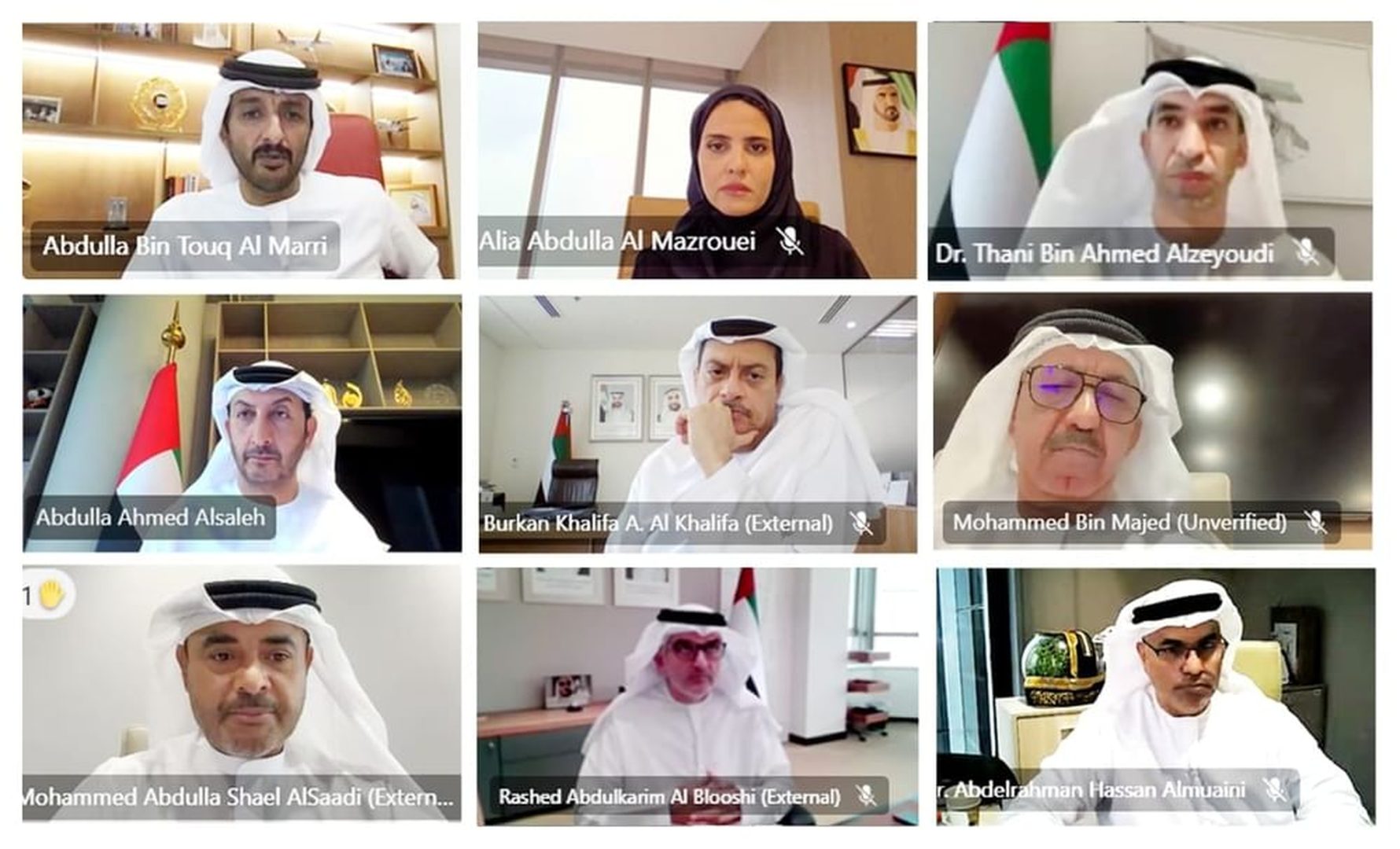
The Economic Integration Committee held its third meeting of 2025, chaired by H.E. Abdulla bin Touq Al Marri, Minister of Economy, and attended by H.E. Dr. Thani bin Ahmed Al Zeyoudi, Minister of State for Foreign Trade; H.E. Alia Abdulla Al Mazrouei, Minister of State for Entrepreneurship, along with the Directors General of Economic Development Departments from across the UAE.
During the meeting, the committee reviewed the latest developments in economic legislation, highlighting their role in enhancing the competitiveness of the business environment and supporting the country’s shift toward a knowledge- and innovation-based economic model. The committee also discussed progress made in implementing the outcomes and recommendations of its second meeting in 2025.
H.E. Abdulla bin Touq emphasised that, thanks to the UAE’s wise leadership, the country has made significant strides in developing an advanced and flexible economic legislative framework, creating an attractive environment for investors, entrepreneurs, and business owners from around the world. This has contributed significantly to the growth and global competitiveness of the national economy.
He noted the vital role the Economic Integration Committee plays in shaping national economic policies and introducing innovative initiatives, in collaboration with both federal and local entities, to ensure alignment across legislative frameworks. Over the past four years, the UAE has developed more than 30 economic laws and decisions.
H.E. bin Touq also highlighted that the UAE is entering a new phase of enhancing its legislative competitiveness in line with global best practices, supported by the Cabinet’s recent approval of an integrated smart legislative system based on artificial intelligence. This system will enable real-time impact assessment of policies on the business community and facilitate streamlined communication with relevant stakeholders, further strengthening the committee’s ability to propose and develop forward-looking economic legislation.
He added that the new system will be instrumental in achieving the national target outlined in the “We the UAE 2031” vision; positioning the UAE as the world’s top country in developing proactive legislation for future economic sectors by the next decade.
The committee also discussed key topics such as the latest developments in the legislative and enforcement framework for competition regulation, the importance of raising awareness of competition policies across economic sectors, and the need to prevent monopolistic practices in order to maintain market balance and protect consumer rights.
Additionally, the committee reviewed the achievements of the UAE Circular Economy Council, including the adoption of 22 circular economy policies across four key sectors: manufacturing, food, infrastructure, and transport. It also established a dedicated policy committee and launched strong partnerships with the private sector to encourage investment in sustainable technologies, clean energy, and waste management.
The committee reaffirmed its support for the implementation and success of these policies and emphasized the importance of accelerating the transition to a circular economy. This will help build a more prosperous future for current and future generations, aligning with the UAE’s goal of becoming the most prosperous society in the world by the next decade.