

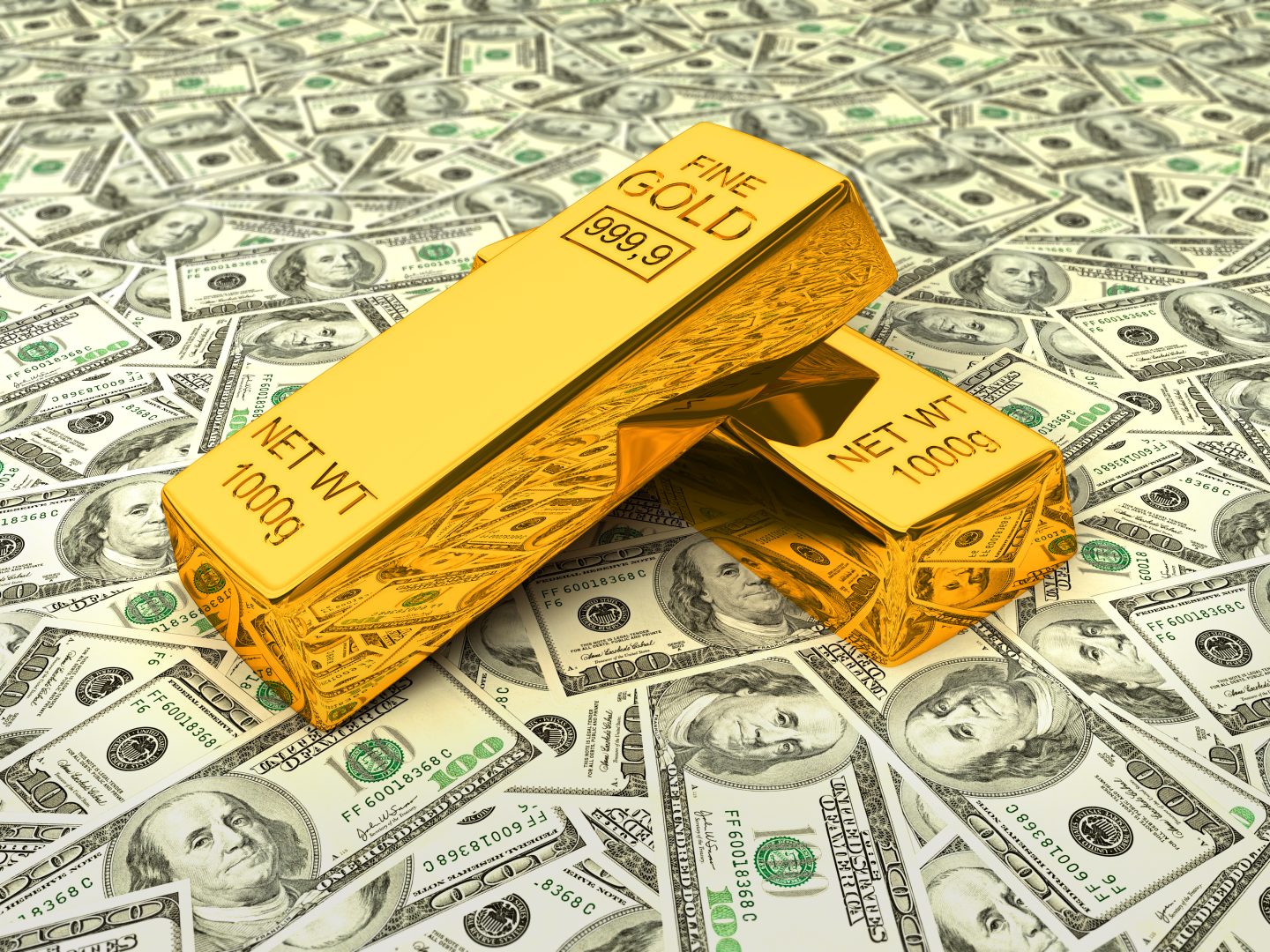
Gold prices are witnessing a strong surge, fueled by trade and political turmoil that has unsettled investors and pushed them to abandon the dollar and U.S. Treasury bonds in favor of the precious metal as a safer alternative.
J.P. Morgan predicts that the average price of gold could reach around $3,675 per ounce by the fourth quarter of this year, continuing its rise to $4,000 by the second quarter of 2026.
Economists attribute this shift to the dramatic changes in U.S. trade policy under President Donald Trump, particularly after his announcement of reciprocal tariffs, which heightened market fears, according to CNBC.
Vivek Dhar, Director of Commodities Research at Commonwealth Bank of Australia, noted that gold has “filled the void” left by declining confidence in U.S. assets.
Notably, gold’s rise has coincided with a loss of the dollar’s and Treasuries’ traditional luster as safe havens — a rare occurrence, Dhar said.
The U.S. Dollar Index has dropped by about 8% since the start of the year, while U.S. Treasury bonds have faced a sharp sell-off. According to the London Stock Exchange Group (LSEG), yields on 10- and 30-year bonds jumped by about 30 basis points in just one week, while gold prices soared 25% over the same period.
Despite Trump’s attempts to walk back comments regarding Federal Reserve Chairman Jerome Powell, the damage to investor confidence in U.S. assets had already been done, according to the World Gold Council.
Amid expectations of rising inflation due to tariff policies, gold is increasingly seen as a powerful hedge, outperforming bonds and the dollar. Analyst Alexander Zumfe emphasized that gold stands apart from other assets, being unlinked to any single country’s policies and free from credit risk; making it particularly attractive during times of geopolitical uncertainty.
Meanwhile, emerging market central banks — historically less reliant on gold reserves — have begun increasing their holdings of the precious metal in a bid to reduce dependence on the dollar.
This shift has revived discussions around “de-dollarization” and the possibility of a multipolar global financial system, with gold positioned as a potential alternative reserve currency.
However, some analysts remain skeptical about a near-term replacement of the dollar, pointing out that the U.S. bond market remains the largest and most liquid in the world, making it difficult to displace.