

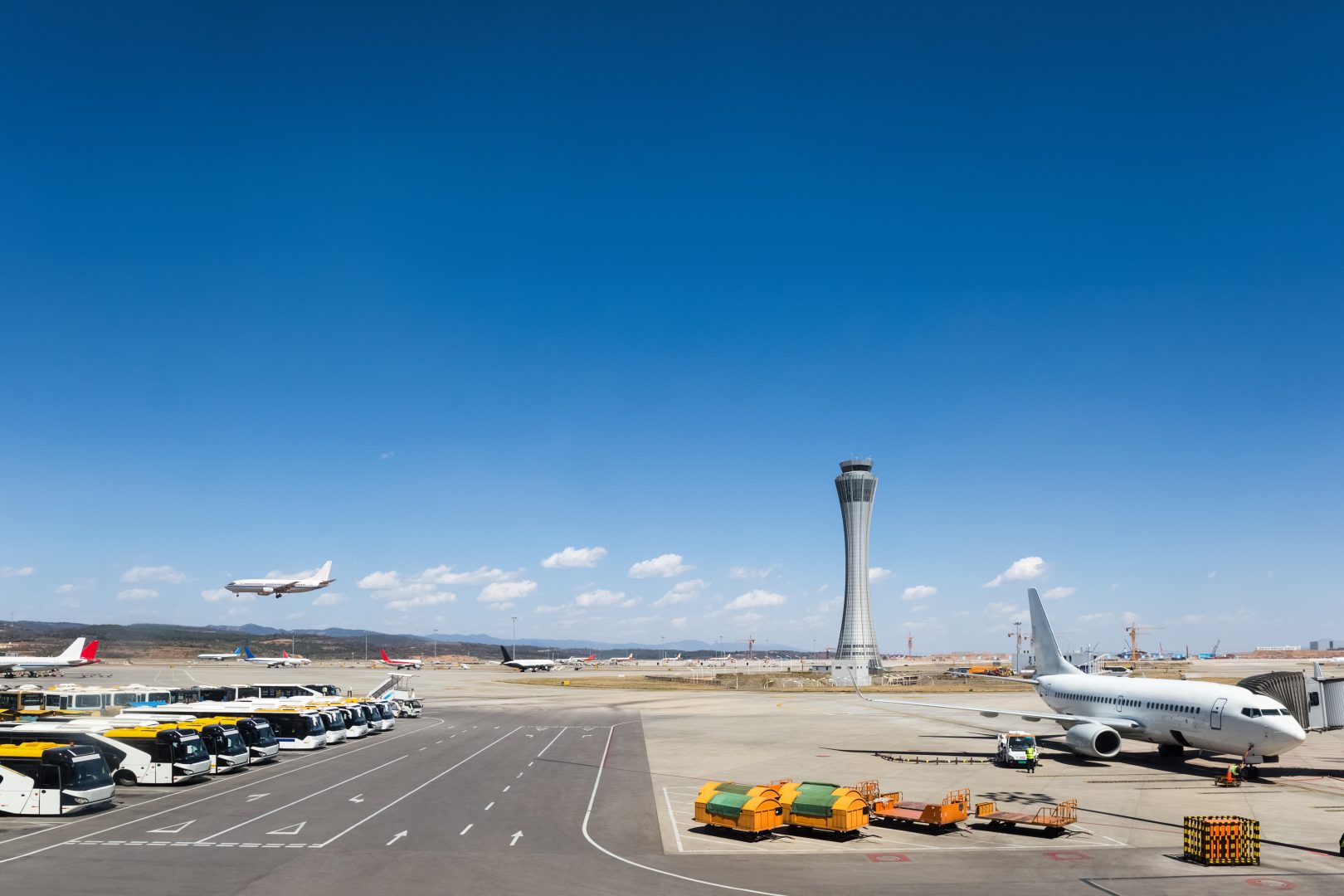
Ras Al Khaimah International Airport has announced the adoption of the advanced thermal dynamic technology “DYNIS” as part of its passenger terminal expansion project, becoming the first airport in the Middle East and Asia to implement this groundbreaking energy efficiency solution. This strategic step reflects the emirate’s commitment to sustainable growth and the adoption of cutting-edge, environmentally friendly innovations.
The project is part of the Ras Al Khaimah Civil Aviation Authority’s efforts to enhance infrastructure efficiency and meet the growing travel demand, in line with the emirate’s continued growth in tourism and economic sectors. From the outset, the expansion prioritized sustainability and energy management, demonstrating a bold vision for a world-class green airport.
Sheikh Eng. Salem bin Sultan bin Saqr Al Qasimi, Chairman of the Civil Aviation Department and Chairman of the Ras Al Khaimah International Airport Board, confirmed that the airport joined Ras Al Khaimah Municipality’s Energy Efficiency Program in 2023. He emphasized that today’s achievement showcases how modern technology can revitalize aging infrastructure to serve long-term sustainability goals.
He noted that the patented “DYNIS” technology, developed in collaboration with leading research institutions like Mines Paris PSL, TÜV, and CNRS, significantly improves the thermal performance of cooling systems without increasing energy consumption or complicating infrastructure. This contributes to a substantial reduction in carbon emissions. The technology was approved by ARTELIA Airport and STG Contracting after being showcased at the COP28 UN Climate Change Conference in Dubai as an innovative solution to one of the biggest energy challenges in airports—air conditioning systems.
Professor Assad Zoughaib, Head of the Research Lab at Mines Paris PSL, stated that the DYNIS system represents a scientific breakthrough in thermodynamics, offering immediate benefits such as enhanced reliability, simplified maintenance, and reduced energy consumption, along with financial returns through lower operational costs. He added that wide-scale adoption of this technology could reduce global emissions by up to 7%—equivalent to the combined emissions of the internet and aviation sectors.
The project is also supported by global air-handling solutions provider Airchal, in partnership with a local HVAC manufacturer, utilizing production sites in France and Abu Dhabi to ensure the necessary technical and logistical support for regional deployment. This milestone positions Ras Al Khaimah International Airport as a smart and environmentally responsible gateway, setting a regional benchmark in aviation sustainability and energy management.