

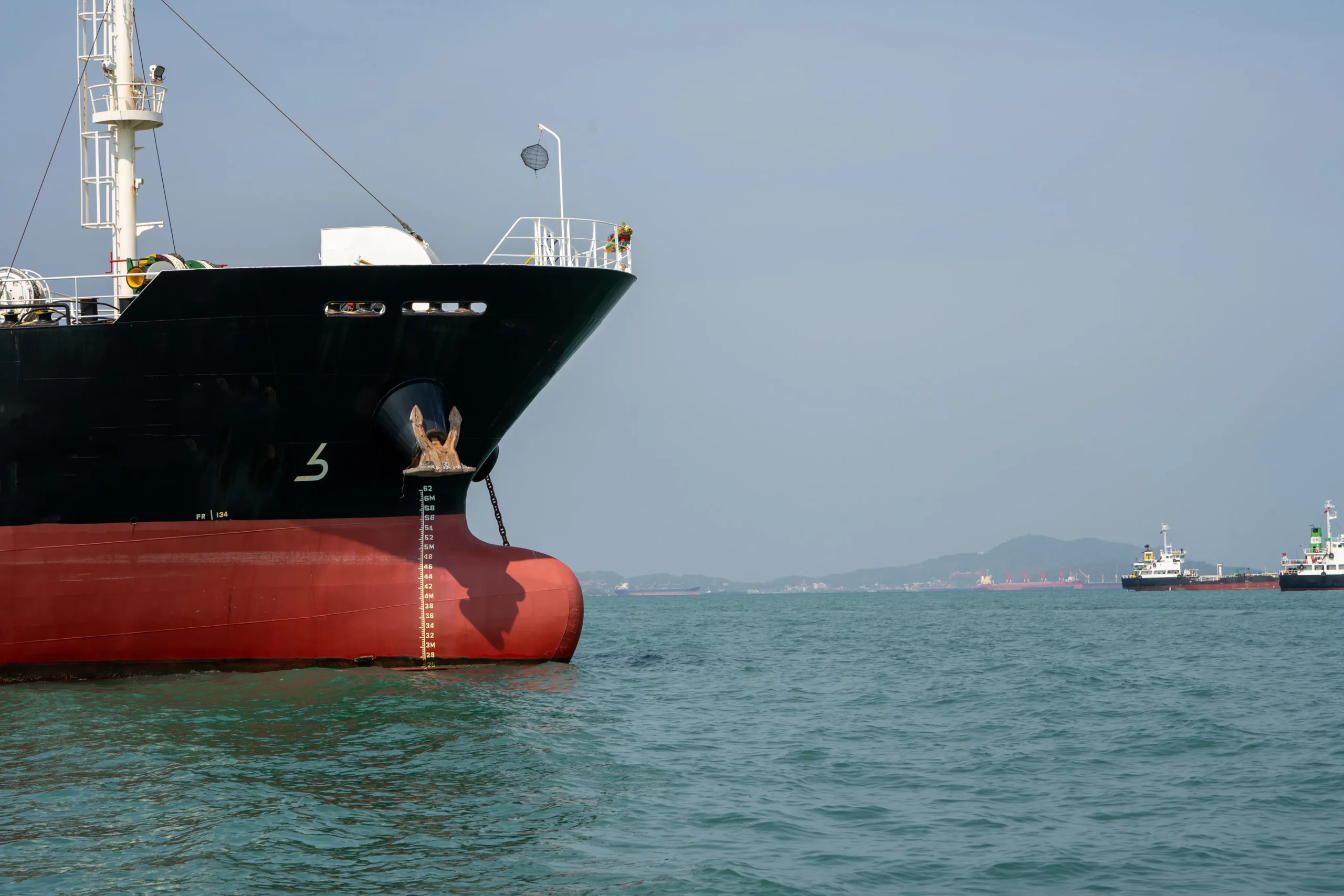
An official from the Ministry of Energy and Infrastructure confirmed that the UAE is actively enhancing low-carbon marine fuel options at Fujairah Port, as part of its ambition to become “a global leader in maritime navigation,” according to a report by Standard & Poor’s.
Saif Al Mazrouei, Assistant Undersecretary for Petroleum, Gas, and Mineral Resources, said during a conference in Fujairah: “Here in Fujairah, the UAE’s maritime hub, we are developing our capabilities in alternative marine fuels, including Liquefied Natural Gas (LNG), methanol, ammonia, and biofuels, in line with growing global demand and environmental standards.”
He added: “The UAE is committed to reducing the shipping sector’s carbon footprint through pioneering initiatives, including adopting alternative fuels and developing smart, eco-friendly vessels.”
Fujairah is the third-largest bunkering hub globally, supplying approximately 7.5 million metric tons of marine fuel in 2024, an increase of 1.8% compared to 2023.
The shipping sector faces significant pressure to cut emissions and achieve the International Maritime Organization’s (IMO) carbon neutrality target by 2050. IMO Secretary-General Arsenio Dominguez stated during his video participation at the Fujairah International Bunkering Forum: “We will follow the expected path.”
Projects related to alternative fuels in Fujairah include the establishment of a biofuel plant operated by Bahrain’s Mercantile & Maritime, and the first biofuel bunkering operation carried out by Vopak as part of its joint venture, Vopak Horizon Fujairah. Additionally, the port is a major hub for storing crude oil and petroleum products, with storage capacity exceeding 100 million barrels, according to Mohammed Al Kindi, co-coordinator of the forum.
Al Kindi added that Fujairah is rapidly transforming into an attractive investment destination, driven by its strategic location and advanced infrastructure, including new storage projects. He attributed the increase in marine fuel sales in 2024 to the port’s proximity to the Strait of Hormuz, one of the world’s most critical oil passages, located only 70 nautical miles away.
Source: Albayan Newspaper